Concrete Coating Website Design Tips: Choosing a Website That Supports Customer Actions
Concrete coating buyers do not visit your website to admire your font choices. They come with a job in mind, a problem to solve, and a short list of questions they want answered fast. Can you coat my garage? Do you serve my area? What does the finish look like? How do I get a quote? If your site makes those answers easy to find, it helps your business. If it buries them under vague branding and pretty but empty design, it costs you calls.
That is the real standard for good concrete coating website design. Not whether it wins compliments from other contractors. Not whether it feels trendy for six months. The measure is simpler and tougher: does the website support customer actions?
For concrete coating companies, those actions are usually straightforward. A homeowner wants to request an estimate. A property manager wants to check service areas. A shopper comparing epoxy systems wants to see proof of quality. A prospect on a phone wants to call without pinching, zooming, and hunting through menus. Every page should make one of those next steps easier.
I have seen plenty of contractor sites that look polished at first glance but fail when you use them like a real customer. Beautiful hero image, no visible phone number. Fancy animation, slow load on mobile. Paragraphs about craftsmanship, no clear explanation of the coating process. None of that helps the person standing in a hot garage, trying to decide who to trust with a concrete floor.
The right website supports decisions, not just branding
A concrete coating company sits in a visual category. People care what the floor will look like when it is done. They want to see color blends, gloss levels, texture, edge work, and before-and-after transformations. But visual appeal alone is not enough. The website has to move a buyer from curiosity to confidence.
That is why concrete coating website design has more in common with good sales process design than with graphic design. The strongest sites answer objections before the lead ever calls. They show the type of work performed, the areas served, the likely fit for the customer, and the easiest next step.
This matters even more in adjacent trades. The same principle holds in epoxy flooring website design, flooring contractor website design, home remodeling website design, mold remediation website design, dock builder website design, and even pool screen enclosure website design. The trade changes, but the customer behavior is similar. People are scanning for relevance, trust, and ease. If they cannot tell within seconds that you do the kind of work they need, they leave.
A contractor website should function like a skilled estimator answering the first wave of questions clearly and calmly. It should not feel like a brochure trapped online.
What concrete coating customers actually need to do on your site
Most contractors overestimate how much copy a visitor wants to read and underestimate how badly that visitor wants to take action. The customer journey is usually compressed. Someone sees your truck, a Google listing, a referral text, or a social post. They land on the site and start checking for signals.
They want to know whether you are legitimate. They want signs that you have done this work before. They want the path to contact you to feel easy. They want to feel that they are in the right place.
For concrete coating companies, that usually means the site should make room for a few core behaviors. A visitor needs to browse project photos without friction. They need to understand what systems or services you offer. They need to confirm location coverage. They need a visible phone number and a simple estimate request path. If those pieces are present and easy to use on mobile, the site is doing its job.
That last point gets overlooked more often than it should. A huge share of contractor traffic comes from phones. If the mobile version is cramped, confusing, or slow, the site is failing at the exact moment intent is highest. A lot of contractor website redesign projects start with that one pain point. The owner notices traffic coming in, but not enough calls coming out. Usually the issue is not mystery. It is friction.
The most expensive website problem is not price, it is lost action
When contractors ask, how much does a contractor website cost, they are usually trying to avoid overpaying. Fair enough. Costs vary widely depending on who builds it, what features are needed, and how much support is included after launch. There is no single fixed number that applies to every contractor.
The more useful question is this: what is the cost of a site that fails to support customer action?
A cheap site can be perfectly fine if your main goal is a credible web presence with current contact info, clear service descriptions, and basic lead capture. For some businesses, especially smaller operators, that is enough to start. DIY builders are often the most budget-friendly path. If you mainly need a trustworthy digital storefront, they can work.
But cheap becomes expensive when the site looks dated, hides your phone number, confuses visitors, or leaves your content stale for months. Outdated information erodes trust fast. So does a poor mobile experience. If someone cannot figure out what you do or how to reach you, the site is not saving money. It is silently leaking leads.
That is why pricing has to be tied to business use, not vanity. A contractor with one crew and a limited service area may not need custom functionality. A larger operation with multiple services, several territories, and paid traffic campaigns may need more strategy and better structure. The right spend depends on the role the site plays in the business.
DIY builder, freelancer, agency, or managed service?
There are four common paths contractors consider. You can build it yourself, hire a freelancer, hire an agency, or choose a managed website for small business. Each path has trade-offs, and none is universally right.
DIY builders appeal to owners who want the lowest upfront cost and direct control. If your needs are basic and you are disciplined about keeping information current, this route can work. Many contractors only need solid service pages, project photos, contact details, and a clean estimate form. For that, the best website builder for contractors may simply be the one you will actually use consistently.

Freelancers fit a different need. They can help with design, setup, and custom touches without the overhead of a full agency. If you want a more polished result than you can create yourself, but do not need broad strategy or complex development, a freelancer can be a practical middle ground. The catch is that support quality varies. Some are great after launch. Some disappear the moment the final invoice clears.
Agencies make more sense when you need deeper strategy, more custom design, or more complex functionality. If your website is tied to broader lead generation goals and a more involved customer journey, a skilled agency can bring structure and direction. You are not just paying for pages. You are paying for planning, architecture, messaging, and execution.
Then there is the managed model. A managed website for small business typically bundles hosting, security, backups, updates, and support. That matters more than many contractors realize. A website is not a yard sign you install once and forget. It needs maintenance, current content, and someone accountable when things break or need changing. For owners who do not want to manage that stack themselves, managed service can be the least stressful route.
I have watched contractors waste months debating platform features when the real bottleneck was maintenance. The site launched, then sat untouched because no one on the team had time to update service areas, photos, offers, or team info. That is where managed support earns its keep.
How to choose based on customer actions, not personal preference
The smartest way to choose a website approach is to work backward from what the customer needs to do. If your ideal lead should view project examples, understand your coating options, and request a quote in under two minutes, your site structure should reflect that.
A concrete coating company usually needs clean service pages, clear contact paths, strong mobile usability, and current information. It may not need exotic features. In fact, too many features often get in the way. Contractors sometimes ask for moving banners, pop-ups, and layered menu systems that look impressive in a meeting but add friction in the field.
A good web designer for contractors will challenge that instinct. They will ask how customers behave, what services matter most, which pages convert, and what information buyers repeatedly ask for on the phone. That is the conversation that leads to a useful site.
Here are five questions worth asking before you choose a build path or provider:
- What specific actions should a visitor be able to complete quickly on the site?
- Who will keep content current after launch, including photos, service details, and contact info?
- How well will the site work on a phone for someone ready to call right now?
- Do you need custom strategy and structure, or mainly a clean, credible web presence?
- If something breaks or needs updating next month, who handles it?
Those questions reveal more than a feature list ever will. They also keep you from paying for complexity you do not need.
Signs your current site is holding your business back
Contractors usually know something feels off before they can name the problem. Leads may be inconsistent. Good referral traffic may not turn into calls. The site may feel fine on desktop in the office, then fall apart on mobile in the real world.
A contractor website redesign becomes worth considering when the site has obvious trust and usability issues. That can mean outdated information, hard-to-find contact details, confusing navigation, or a mobile experience that feels awkward. It can also mean the site no longer reflects the work you want to sell. Maybe your company moved deeper into garage floor coatings, flake systems, or commercial surfaces, but the website still reads like a generic handyman brochure from six years ago.
This is especially common when contractors add services over time. A company that started with general coatings may now focus heavily on residential garage systems or specific epoxy flooring applications. If the site does not make that specialization visible, it is forcing the customer to guess.
I have seen sites where the owner was frustrated by poor lead quality, only to discover the homepage barely mentioned the actual service they wanted more of. The website was attracting the wrong audience because the message was too broad. A sharper concrete coating website design fixed the issue, not by getting fancier, but by getting clearer.
What strong service pages look like in this industry
Most contractor sites undersell service pages. They treat them like placeholders, when in reality they are often where buying decisions sharpen. A strong concrete coating page should do several things at once. It should confirm what the service is, who it is for, what the finished result can look like, and how to take the next step.
For example, if you offer garage floor coatings, that page should not read like a vague mission statement. It should sound like a company that has done the work. Talk plainly. Mention the type of spaces served. Explain the visual and practical outcomes customers care about. Make the contact path visible. The same approach works for epoxy flooring website design and flooring contractor website design more broadly. Clarity wins.
This is also where original photography matters. Even a modest collection of real project images can do more persuasive work than paragraphs of generic claims. Visitors want evidence, not adjectives.
Why support after launch matters more than most contractors expect
A website that launches in perfect condition can still underperform six months later if nobody maintains it. Phone number changes, service areas expand, photos get outdated, and messaging drifts away from the business. Security, updates, hosting, backups, and support are not glamorous topics, but they affect whether the site remains usable and trustworthy.
That is one reason some contractors prefer a managed option. Managed setups typically bundle the technical upkeep that owners either forget or never wanted to handle in the first place. If you run crews, estimate jobs, chase payments, and manage hiring, spending your Sunday evening troubleshooting plugins is rarely a smart use of time.
For example, Scalable Websites is a Houston, TX based managed website provider for contractors nationwide that offers professionally designed websites on a monthly subscription, with hosting, security, unlimited updates, a dedicated project manager, and launches in days. That kind of arrangement is not right for every business, but it illustrates why managed service appeals to busy owners. Convenience is not fluff when it keeps the website current and working.
The platform question matters less than most people think
Contractors often get stuck asking for the best website builder for contractors, as if one platform automatically produces better results. managed websites for contractors In practice, platform matters less than execution for most small and mid-sized service businesses.
A weak site on a respected platform is still a weak site. A clear, current, mobile-friendly site on a simpler platform can outperform a custom build that confuses customers. The basics carry more weight than owners sometimes expect. Is the contact info prominent? Is the content current? Does the site work well on a phone? Can a visitor quickly understand what you do and how to reach you?
That is not an argument against strategy or custom work. It is a reminder to keep priorities straight. Fancy structure cannot rescue unclear messaging. Better technology cannot compensate for stale content. If the customer journey is messy, the platform choice is not your first problem.
How different contractor niches prove the same point
One helpful way to think about site design is to compare nearby trades. A visitor landing on a mold remediation website design page wants reassurance, credibility, and a clear next step. A visitor on a dock builder website design page wants proof of project capability, visuals, and service area clarity. Someone browsing home remodeling website design examples wants to see workmanship and understand fit. On a pool screen enclosure website design site, the customer wants to know whether the contractor handles the exact structure and layout they need.
Concrete coating is no different. Buyers may care about surface prep, finish appearance, and durability more than a remodeling client would, but the pattern is the same. Customers reward sites that reduce uncertainty and punish sites that create it.
That means your website should not be built around what you want to say first. It should be built around what the customer needs to know to act.
What a persuasive contractor site actually says
Persuasion on a contractor website is usually quiet. It comes from relevance, ease, and proof, not hype. The tone should feel confident, not inflated. Specific, not puffy.
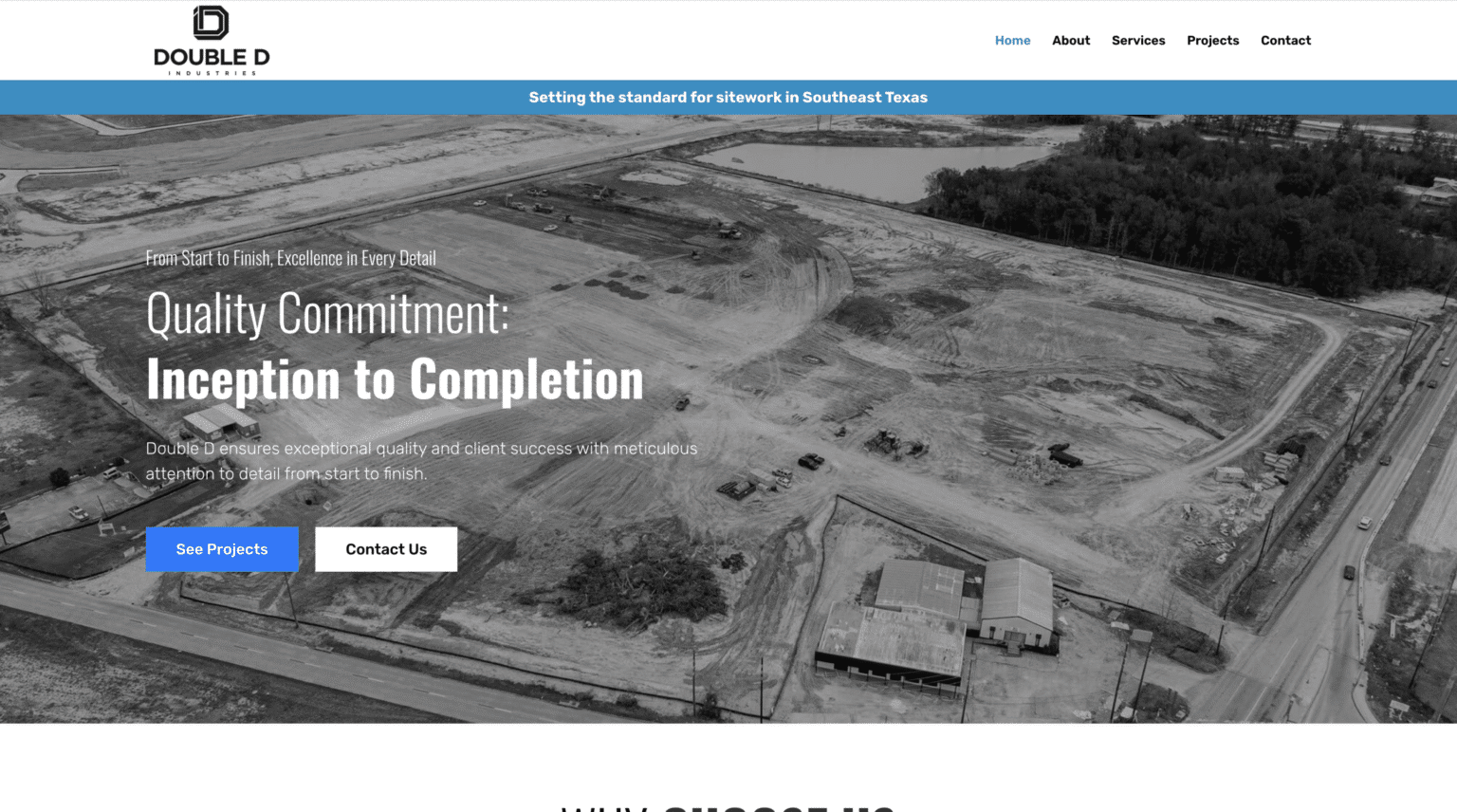
A good site says, in effect: this is the work we do, this is what it looks like, this is where we do it, and this is how to reach us. It should not force visitors to decode marketing language. If you serve homeowners, write for homeowners. If you want more garage floor jobs, show garage floor work prominently. If you are trying to attract commercial leads too, separate those pathways cleanly so neither audience gets muddled.
That is where an experienced web designer for contractors earns value. They know that design is not just how the page looks. It is how it guides action. They also know when not to overbuild. Some of the best contractor sites I have seen were not technically flashy. They were simply easy to use, easy to trust, and easy to contact.
Spend for fit, then demand usability
If you are weighing a DIY path, a freelancer, an agency, or a managed setup, tie the decision to your real operating needs. If you only need a basic web presence and can keep it current yourself, a lower-cost route may be enough. If you need stronger structure, custom messaging, or broader support, paying more may be justified. There is no fixed answer to how much does a contractor website cost because the right cost depends on scope, functionality, and ongoing maintenance.
What should stay fixed is the standard. Your website should help customers do what they came to do. It should be current, mobile-friendly, easy to navigate, and clear about contact details. It should reflect the work you actually want to win. It should remove friction, not add it.
That is the difference between a website that merely exists and one that supports customer actions. For a concrete coating business, that difference is not academic. It is the difference between traffic and leads, between attention and trust, between a site that looks busy and one that quietly helps grow the company.