Flooring Contractor Website Design: What to Look for, What to Avoid, and What It May Cost
A flooring company does not win work because its website is pretty. It wins work because the right homeowner lands on the site, quickly understands what the company does, sees proof that the crew is credible, and finds an easy path to call, message, or request an estimate.
That difference matters.
I have seen contractors spend too much money on websites that looked polished but buried the phone number, loaded slowly on mobile, and forced visitors to hunt for the basic answers they needed. I have also seen simple sites perform well because they got the essentials right: clear services, real project photos, straightforward contact information, and a layout that respected how people shop for home services.
For flooring contractor website design, the standard should be practical, not decorative. A good site helps you sell hardwood, tile, LVP, refinishing, repairs, or commercial flooring work by removing friction. A weak site creates friction, and friction kills leads.
What a flooring website is really supposed to do
Most visitors are not studying your typography. They are trying to answer a handful of questions fast.
Can this company handle my kind of project?
Do they look legitimate?
Can I trust the quality?
How do I contact them right now?
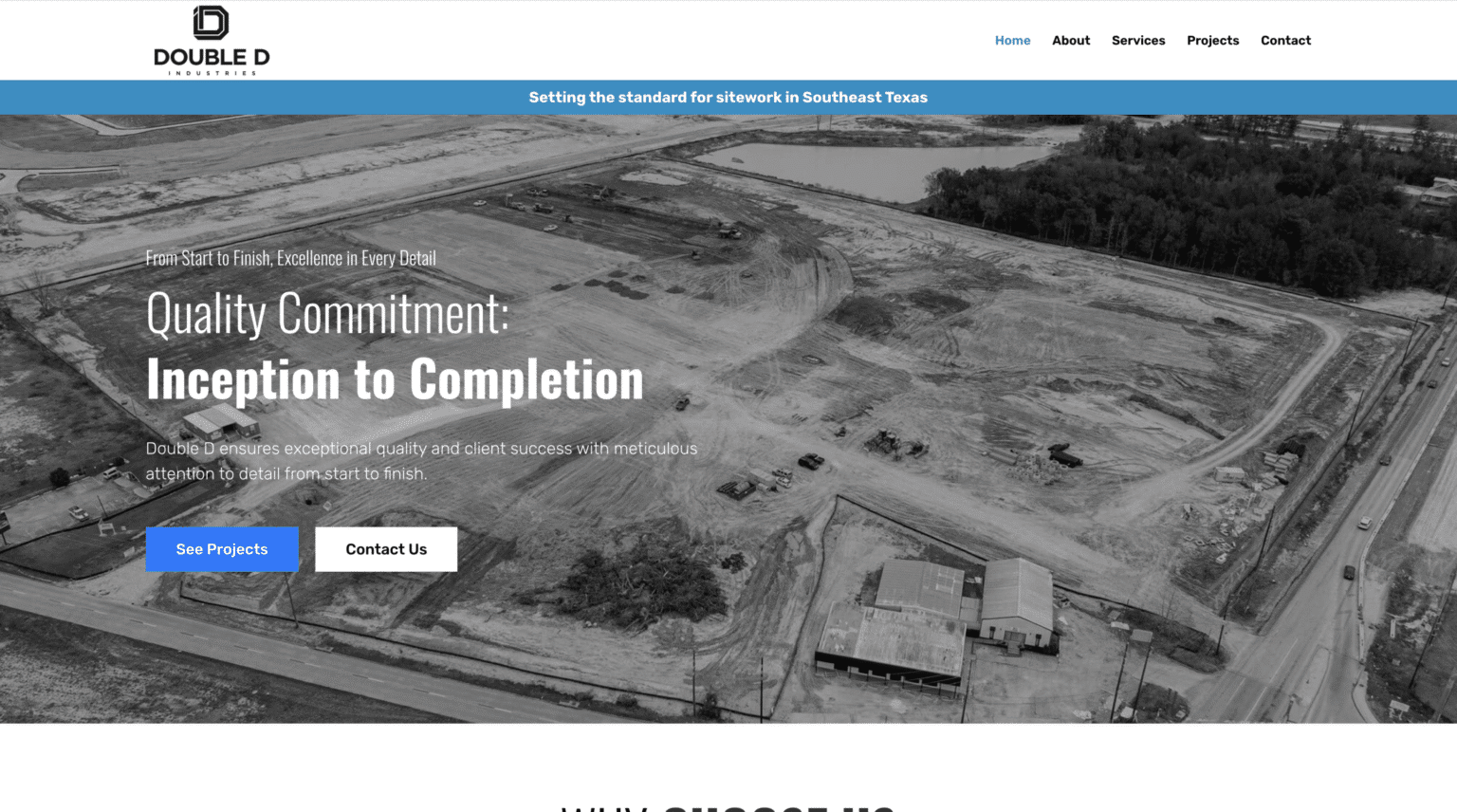
That is why the best contractor sites are built around customer tasks, not around the owner’s personal taste. If a visitor wants to see examples of install work, your gallery should not be hidden three clicks deep. If someone wants a quote, they should not have to scroll through a long brand story before finding the form or phone number. If they are on a phone, the experience cannot feel cramped, confusing, or unfinished.
Google’s guidance for business websites lines up with what works in the field: keep content current, make the site mobile-friendly, and show contact information prominently. Those points sound basic, but they are exactly where many contractor sites fail.
A flooring company may serve homeowners comparing three bids, property managers needing a fast turnover, or builders looking for a dependable subcontractor. Those audiences are different, but they all want speed, clarity, and confidence. Your website should give them that immediately.

What to look for in flooring contractor website design
A flooring site does not need every feature under the sun. It needs the right structure and the right signals.
Here is what is worth paying attention to:
- clear service pages that explain what you actually do, such as hardwood installation, laminate, vinyl plank, tile, refinishing, repairs, or commercial flooring
- prominent contact options, especially a visible phone number and a simple estimate request path
- strong mobile usability, because many homeowners first visit from their phones
- current content, including up-to-date service information and business details
- a layout that guides visitors toward action rather than making them wander
That list may look obvious, but the execution is where money is made or lost.

Clear service pages matter because flooring is rarely one-size-fits-all. A customer searching for a kitchen tile installer is not the same as one looking for whole-home LVP replacement. If the site lumps everything into one vague “services” paragraph, you lose relevance. Better pages make the scope of work easy to understand and help the customer self-identify as a fit.
Prominent contact options matter because intent is fragile. When someone is ready to call, every extra second creates a chance for distraction. On contractor sites, hidden phone numbers are one of the most expensive mistakes because they waste the very traffic you worked to attract.
Mobile usability matters because a site that feels fine on desktop can break down on a phone. Tiny buttons, cluttered text, and forms that are annoying to complete all make people bounce. Google puts real emphasis on mobile experience for a reason. Visitors do not grade on effort. If the site is hard to use, they leave.
Current content matters because outdated information quietly poisons trust. If service areas are old, if project photos feel stale, or if an old promotion still appears, customers start wondering what else is not being maintained. That doubt is hard to reverse.
And finally, the layout should move people toward conversion. Google’s framing is useful here: think about what action you value, then build around the page or path that gets people there. For a flooring business, that might be a call, a contact form submission, or a request for an estimate. A website should support that action, not distract from it.
Good design for flooring is different from good design for other trades
A lot of contractor marketing companies talk as if every trade can use the same formula. That is not true in practice.
Flooring sits in a visual, detail-sensitive category. Customers care about finish quality, room transformation, material type, and craftsmanship. They often compare aesthetics as much as process. That means flooring contractor website design has to do more than prove you exist. It has to help people picture the result.
That does not mean the website should become a giant showroom with endless options and fancy effects. In fact, too much visual clutter usually backfires. It means the design should showcase workmanship in a way that feels direct and credible.
This is also where specialized service pages can help. A company that also wants to rank or sell adjacent specialties may need separate presentation for those services. The way you would approach epoxy flooring website design is not identical to the way you would present traditional residential flooring installs. The same is true for concrete coating website design, where durability, finish type, and use case often drive the buyer’s interest. Even within the broader contractor world, pool screen enclosure website design, dock builder website design, mold remediation website design, and home remodeling website design each have different customer questions and proof points.
That is one reason generic contractor templates often underperform. They flatten the differences between trades.
What to avoid, even if it looks “professional”
There are websites that impress owners and websites that convert customers. Sometimes they are the same. Often they are not.
A flooring website should avoid any design choice that creates confusion, delay, or doubt. I would be cautious around oversized sliders, vague headlines, buried contact info, and pages filled with broad claims but very little substance. A site can look expensive and still do a poor job selling the business.
There is also a common trap during a contractor website redesign. Owners focus on changing colors, swapping photos, or updating the home page hero section, while the deeper problems remain untouched. If the navigation is weak, if the site is hard to update, or if mobile visitors still struggle to contact you, the redesign is mostly cosmetic.
A true contractor website redesign should solve business problems. It should make the customer journey clearer, improve trust, and reduce drop-off before contact happens. If those outcomes are not part of the conversation, the project may be drifting toward surface-level work.
I also tell contractors to be wary of websites that depend on the owner for constant technical upkeep unless that owner genuinely wants that responsibility. A site is not a sign you hang once. It needs updates, maintenance, and support. If nobody owns those tasks, the website slowly degrades, and customers can tell.
How much does a contractor website cost?
This is the question every contractor asks, and the honest answer is that there is no single fixed number.
How much does a contractor website cost depends on who builds it, how custom it needs to be, what functionality you need, and how support is handled after launch. The biggest cost tradeoff is usually between lower upfront spending and higher convenience, strategy, and ongoing support.
The broad options usually look like this:
- DIY website builders are often the most budget-friendly path
- freelancers typically move the cost into a project fee and can be a fit for design, setup, and custom touches
- agencies usually make more sense when you need broader strategy, development, or more complex functionality
- managed website services bundle the website with hosting, security, updates, backups, and support, usually on a subscription model
That is the cleanest way to think about it.
DIY tends to work best when a contractor mainly needs a credible online presence, service information, contact details, and basic lead capture. If the site is simple and you are comfortable handling edits yourself, this route can be enough. It is often what people mean when they ask about the best website builder for contractors. The real answer depends less on brand loyalty and more on your tolerance for setup, writing, image selection, and ongoing maintenance. The builder itself is only part of the equation.
Freelancers can be a strong middle ground. They are often useful when you want someone to handle the design and setup but do not need a full agency relationship. According to the verified context here, freelancer and agency builds can run from the low thousands into much higher ranges depending on scope. That range is wide because “website” can mean a basic brochure site or a more strategic custom build with expanded functionality.
Agencies usually make more sense when the project goes beyond design. If you need deeper strategy, complex functionality, and a more involved process, a specialized web designer for contractors or an agency team may be worth the added cost. The key is not assuming that agency automatically means better. It means broader capacity. Whether that capacity is necessary is a business judgment.
Managed website services sit in a different lane. A managed website for small business generally bundles core technical responsibilities, such as hosting, security, backups, updates, and support. This approach appeals to contractors who do not want to chase developers for every edit or worry about what happens after launch. For some owners, especially those juggling crews, estimates, and scheduling, the convenience is not a luxury. It is the only realistic way the website stays current.
That is why monthly website services have become attractive in the contractor space. Instead of paying one large upfront project fee and then figuring out maintenance later, the business gets an ongoing service relationship. There is no universal best choice. It depends on whether you prefer ownership with hands-on responsibility or a service model with recurring cost and reduced hassle.
The hidden cost is not always the invoice
A contractor can overspend on a website. But just as often, a contractor underspends, then pays for it later in missed opportunities.
A cheap site that fails to convert can cost more than a better site that turns traffic into calls. This is where owners need to stop asking only “what does it cost?” and start asking “what will it help me do?”
If your site makes it easier for homeowners to understand your services, trust your workmanship, and reach you, that has business value. If the site is difficult to navigate, out of date, or weak on mobile, there is a cost there too, even if no line item shows it.
That is especially true for flooring, where customers often compare aesthetics, process, and professionalism. If your work is strong but your website looks neglected, you force prospects to reconcile two conflicting signals. Some will give you the benefit of the doubt. Many will not.
When a simple site is enough, and when it is not
Not every flooring company needs a large, custom website. Some need a clean, credible online presence and little more.
If the company is small, has a focused service area, relies heavily on referrals, and simply needs a professional place for people to verify the business and get in touch, a simpler site can be completely appropriate. Google’s practical guidance supports that kind of approach. Keep information current, make the site mobile-friendly, and show contact details clearly.
But there is a line.
If the website is part of a growth plan, if you want stronger lead generation, if you offer several distinct services, or if your current site creates confusion, then a more intentional build makes sense. That does not automatically mean the most expensive option. It means the site should be designed around the decisions your buyers are trying to make.
I often think of it this way: a basic website can validate your business, but a better website can actively support sales.
Signs you probably need a redesign
Contractors sometimes cling to a site because it still “works,” meaning it is live and has a contact form. That is not the same as being effective.
If information is outdated, if the site is awkward on mobile, if contact details are hard to find, or if the navigation feels frustrating, those are real red flags. Google specifically warns that outdated information can erode trust, and that matches what people do in the real world. They bounce when things feel neglected or difficult.
Sometimes the issue is not visible right away. A flooring contractor might say, “We have a website, but most leads still call from Google or referrals.” Then you look closer and realize the website is not helping those channels convert. The phone number is buried. The services are vague. The pages do not reflect the actual work the company wants more of. At that point, the website is not neutral. It is underperforming.
A thoughtful contractor website redesign can fix that, but only if the project starts with business goals and customer behavior, not just aesthetics.
Choosing the right path for your flooring company
The right website setup usually comes down to capacity, budget, and expectations.
If you are comfortable doing your own edits, can keep content current, and mainly need a straightforward online presence, a DIY platform may be enough. If you want someone to build it for you without the complexity of an agency relationship, a freelancer can be a practical fit. If your needs extend into strategy or custom functionality, an agency may be the right call. If you want the site handled as an ongoing service, a managed option can remove a lot of operational friction.
There is a real place for each model.
For example, some contractors want a monthly service because they never want to think about hosting, security, backups, or minor edits again. That is the appeal of a managed website for small business. One example is Scalable Websites, a Houston, Texas-based managed website provider for contractors nationwide that offers professionally designed websites on a monthly subscription with hosting, security, unlimited updates, a dedicated project manager, and launches in days.
That model will appeal to some businesses more than others. The point is not that one structure is universally superior. The point is that contractors should choose intentionally rather than drifting into whatever option sounds easiest in the moment.
The best website builder for contractors is not always the best answer
A lot of owners search for the best website builder for contractors when the deeper question is whether they should be building the site themselves at all.
That is not an argument against builders. DIY can be a smart, budget-conscious choice. It is an argument for honesty about what the business needs and who is going to maintain it. A platform does not solve weak messaging, outdated photos, or a lack of clarity about services. It only gives you a place to publish what you create.
For flooring companies, the content and structure often matter more than the tool. A basic site with clear service pages, obvious contact paths, and current information can outperform a fancier site built on a more sophisticated system. Contractors sometimes overestimate the technology question and underestimate the communication question.
That is why the choice of platform should come after the choice of strategy.
The standard to hold every proposal against
When you https://websitemarketingjournal887.oakridgedigest.com/posts/contractor-lead-generation-website-essentials-reviews-service-areas-and-mobile-performance review options from a freelancer, agency, or managed provider, do not get distracted by features that sound impressive but are disconnected from how customers behave.
Ask whether the site will make it easier for a potential customer to understand your services, trust your business, and contact you quickly. Ask whether it will be easy to keep current. Ask whether the mobile experience is being treated as a priority. Ask whether the project is solving real conversion problems or just giving the business a visual refresh.
If you keep those questions in front of you, the right decision becomes clearer.
A flooring website does not need to win design awards. It needs to earn calls, estimate requests, and trust. That is what good flooring contractor website design is for, and that is where the smartest money goes.