Pool Screen Enclosure Website Design Red Flags: When to Redesign for Better Results
A pool screen enclosure company does not need a flashy website. It needs a site that makes a homeowner feel confident enough to call, request a quote, or send photos of the project.
That sounds simple. In practice, it is where many contractor sites fail.
I have seen plenty of home service websites that look acceptable at first glance, yet quietly lose leads every week. The homepage has a nice hero image, maybe even a decent logo, but the phone number is buried, the service area is vague, the gallery is thin, and the mobile version feels like a chore. For a trade like pool screen enclosure work, where trust, timing, and visual proof matter, those problems are expensive.
If your site is not helping you win better leads, close faster, or support your sales process, a contractor website redesign may be overdue.
The real job of a pool screen enclosure website
Homeowners shopping for screen enclosures are usually trying to answer a few practical questions fast. Can this company handle my type of project? Do they serve my area? Do they look established? Can I reach them without jumping through hoops? What will the process feel like?
A good pool screen enclosure website design removes friction from each of those questions. It does not ask visitors to admire the site. It helps them move.
That distinction matters because contractor websites often get judged by the owner’s taste instead of customer behavior. A site may look “fine” internally while underperforming in the field. The standard should not be whether you like the colors. It should be whether the site supports conversions, meaning the actions your business actually values, such as phone calls, quote requests, and contact form submissions.
Google’s guidance for business websites is useful here because it stays grounded. Keep the content current. Make the site mobile friendly. Make contact information easy to find. Think like the customer. Those basics sound almost too obvious, yet they are exactly where many contractor websites break down.
A redesign is not always about appearance
A lot of owners delay redesigning their site because they think redesign means a total rebrand, a huge cost, or months of disruption. Sometimes it does. Often it does not.
In many cases, the issue is structural, not cosmetic. The site may have been built years ago for desktop visitors, then patched together over time. Services were added. Team members changed. Photos came and went. The original platform may still technically work, but the website no longer reflects how the business sells.
That is when the red flags start stacking up.
The red flags that usually mean you are losing business
Here are the signs I would take seriously if I were reviewing a pool screen enclosure website design for performance rather than vanity:
- The site is difficult to use on a phone, especially when trying to tap buttons, read text, or fill out a form.
- Contact information is hard to find, inconsistent, or missing from key pages.
- Service details, pricing references, or business information are outdated.
- Visitors have to click around too much to understand what you do and where you work.
- The site does not clearly guide people toward a quote request, phone call, or other conversion action.
Those are not minor annoyances. They affect trust.
A homeowner standing by a damaged enclosure or planning a backyard upgrade is not in the mood to decipher your navigation. If the site makes basic tasks harder than they should be, many people will simply leave and call the next company.
Mobile problems are no longer a small issue
For contractors, mobile weakness is one of the most common reasons to redesign.
A lot of older sites were built when desktop behavior dominated. On a large monitor, the layout may still feel passable. On a phone, it turns into a cramped maze. Buttons sit too close together. Text shrinks. Images crop badly. Quote forms become irritating. Sometimes the phone number is visible but not easy to tap. Sometimes the page speed feels sluggish enough that users give up before the gallery even loads.
Google has long emphasized mobile usability for business websites, and for good reason. Your customer is often browsing from a couch, a jobsite, a backyard, or a parking lot. They are not conducting a research project. They are making a quick judgment.
For pool screen enclosure companies, mobile matters even more because visual proof carries so much weight. Before-and-after images, project photos, and examples of different enclosure styles can help close the gap between curiosity and contact. But if those assets are poorly displayed on a phone, they stop doing their job.
Outdated content quietly erodes trust
You do not need a giant content library to win leads. You do need accurate information.
Outdated pricing language, old promotions, stale announcements, and incomplete service descriptions can damage credibility fast. Google specifically warns that outdated pricing and announcements erode trust, and that lines up with what homeowners actually do. If they see old dates, discontinued offers, or pages that feel abandoned, they start wondering what else in the business is neglected.
For a pool screen enclosure contractor, that can show up in subtle ways. Maybe your site still references a service area that has changed. Maybe the gallery is full of old photos that no longer reflect the quality of your current work. Maybe your business now handles rescreening, repairs, or upgraded materials, but the site never caught up.
A redesign becomes worthwhile when the old site is so fragmented that updating content one page at a time feels like patching drywall in a house with foundation issues.
When navigation works against the sale
Contractor websites often suffer from what I call owner logic. The structure makes sense to the business because it mirrors internal categories, not customer questions.
A visitor does not want to decode your menu labels. They want to know whether you handle their project.
That is why service pages matter. If someone lands on your site looking for patio enclosures, lanai screening, pool cage repair, or a related service, the path should be obvious. The same applies in adjacent trades. A dock builder website design has to help homeowners understand project types quickly. A mold remediation website design must make urgent next steps clear. A home remodeling website design needs to organize complexity without overwhelming the visitor.
The exact trade changes. The principle does not.
When users cannot find what they need in a few seconds, the site stops functioning as a sales tool. At that this website point, redesign is not a branding exercise. It is operational cleanup.
Good design for contractors is really about decision support
A lot of people talk about design as if it were separate from sales. For contractors, the two are tied together.
Your website should support a decision. It should answer enough questions to move a homeowner closer to calling. It should also reduce anxiety. On a strong contractor site, the visitor can quickly understand the company, the service, and the next step.
That applies whether you are working on pool screen enclosure website design or on sites for adjacent specialties like concrete coating website design, epoxy flooring website design, or flooring contractor website design. These are visual trades, but they are also trust-based trades. Homeowners need signs of professionalism, clarity, and responsiveness.
A redesign makes sense when your current site does not support those decisions well. That may show up as low lead volume, weak lead quality, or sales conversations that constantly begin with confusion the website should have already resolved.
If people cannot contact you easily, fix that first
This sounds basic because it is basic.
A contractor site should make contact information prominent and easy to use. Google recommends showing contact details clearly, and there is no reason to fight that guidance. If your phone number, form, and primary call to action are buried or inconsistent, your site is making the simplest part of lead generation harder than necessary.
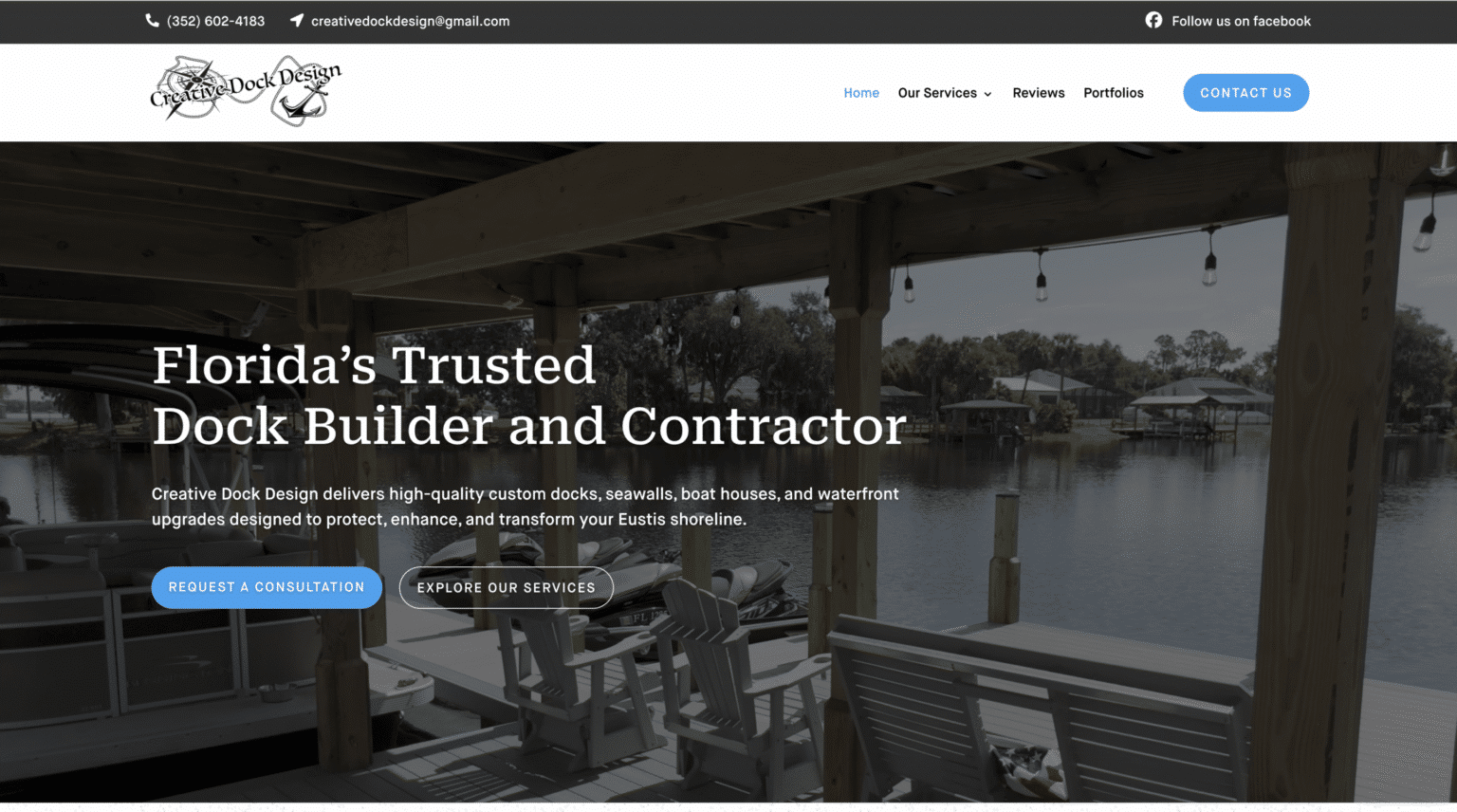
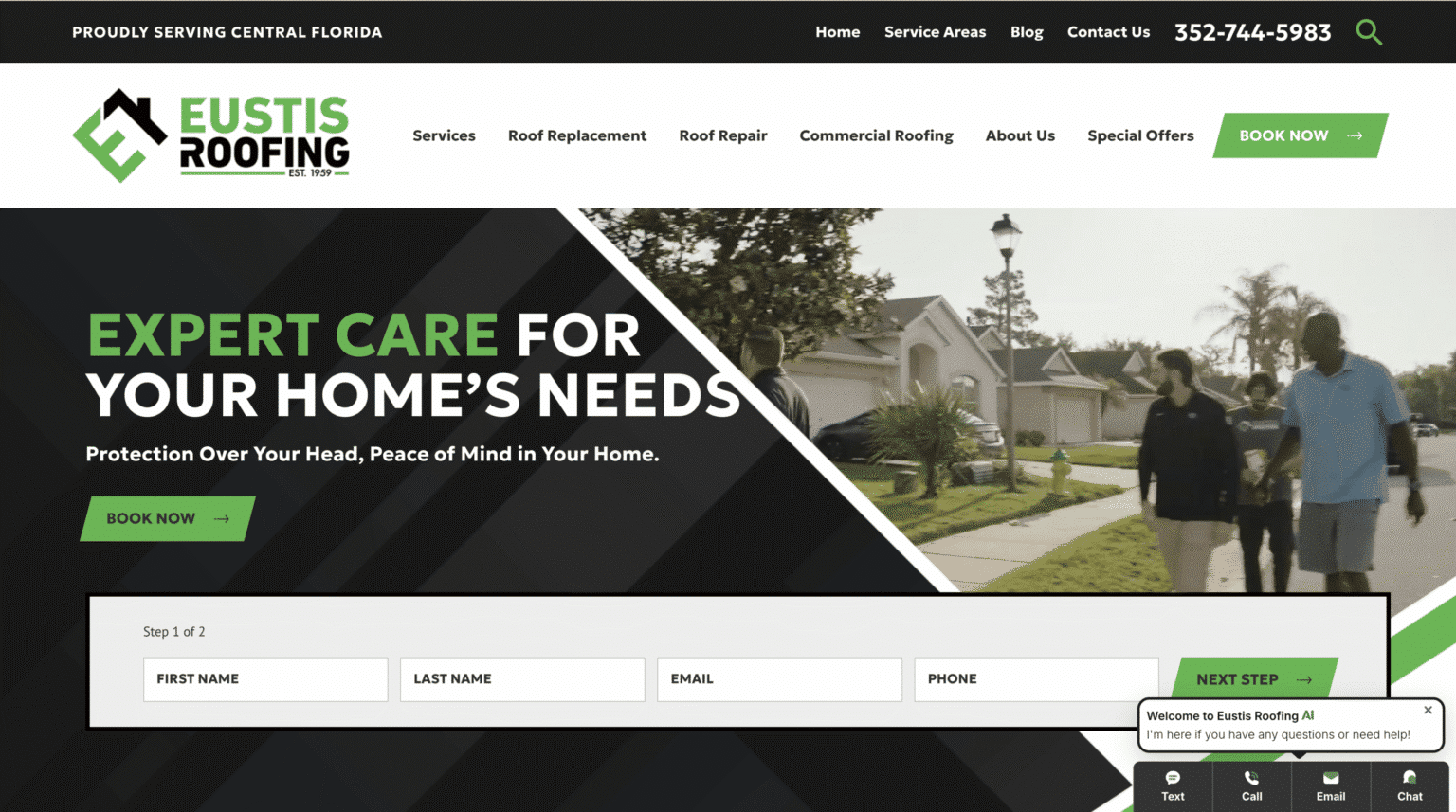
For a pool screen enclosure company, I would expect a homeowner to be able to identify the service area and preferred contact path almost instantly. If that takes effort, the site is underperforming.
The same issue appears across trades. I have seen home remodeling website design projects where the business had excellent craftsmanship but hid the quote form behind several clicks. I have also seen specialty sites where the owner thought a generic “contact us” page was enough, even though visitors clearly wanted a quote-oriented experience. A redesign is often justified by something as straightforward as tightening the path from landing page to inquiry.
What if the site still “works”?
This is where many owners get stuck.
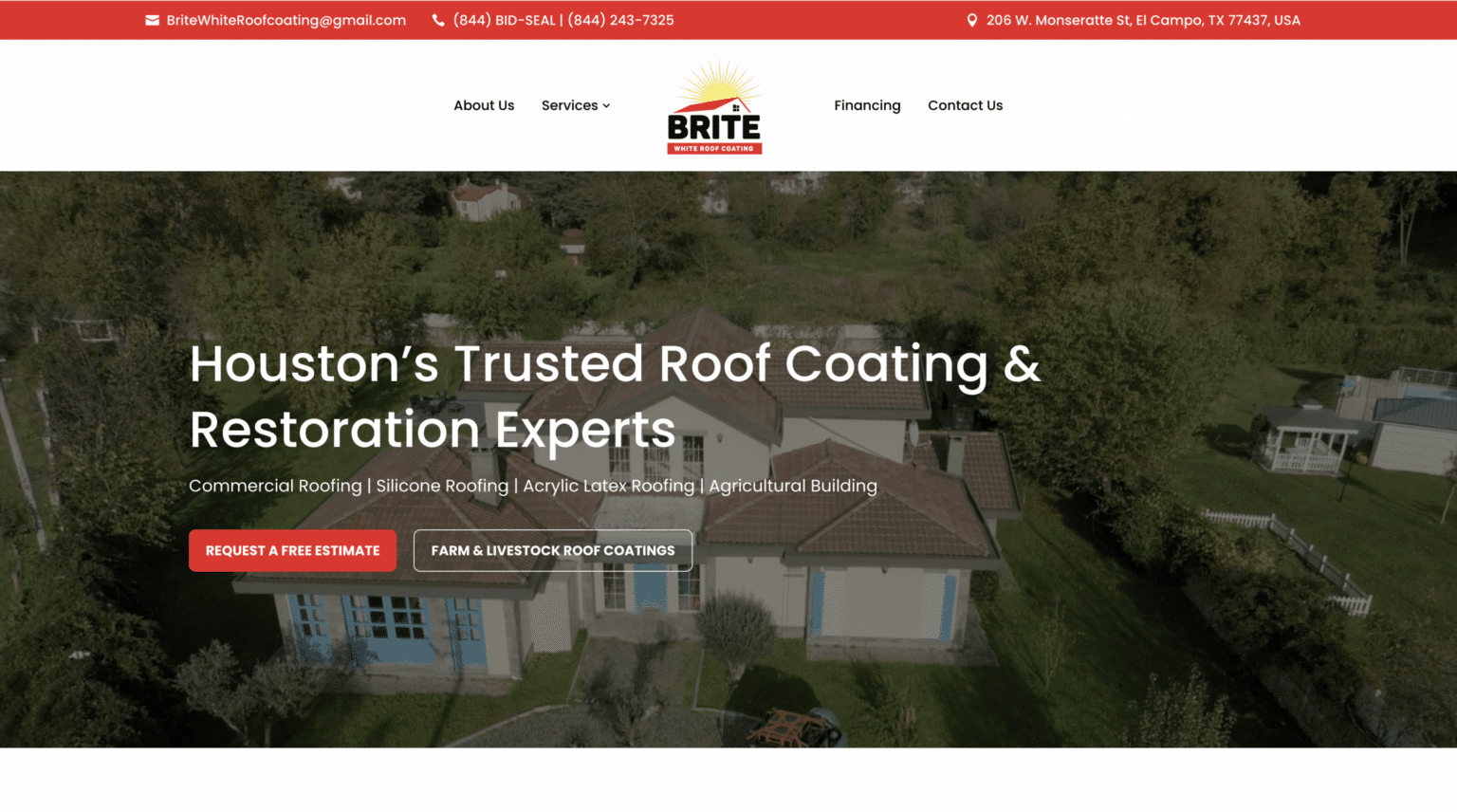
The website loads. It has your logo. It has your phone number somewhere. Technically, it works.
But “works” is not the same as “produces.”
A site can be online and still be costing you opportunities. If your sales team keeps answering the same basic questions, if leads arrive confused about what you offer, or if mobile users drop off before contacting you, the site is creating drag.
Contractors often accept this because they compare their site to a lower standard than they should. They think the website only has to exist. A better standard is whether it helps a stranger trust you faster than your competitors do.
That is why some redesign decisions should be based less on aesthetics and more on friction. Every unnecessary click, every vague page title, every outdated detail gives a prospect one more reason to hesitate.
The cost question is real, but context matters
Sooner or later, every owner asks the same thing: how much does a contractor website cost?
There is no single fixed answer. Cost varies widely depending on the path you choose, the complexity of the site, and how much support you want after launch. Verified guidance from major platforms and industry sources is consistent on this point. Pricing can range from a budget-friendly DIY build to a much more expensive custom agency project.
The broad tradeoff is straightforward. A DIY route usually carries the lowest upfront cost. A freelancer may be a fit if you need help with design, setup, and a few custom touches. An agency is more appropriate when strategy, development, or more complex functionality are involved. A managed website for small business can bundle ongoing support items such as hosting, security, backups, updates, and maintenance, which is attractive for owners who do not want website chores landing on their desk.
That is often the real calculation, not just price. It is whether you want to build, manage, and troubleshoot the site yourself.
Choosing the right redesign path
There is no universal best option, but most contractor website redesign projects fall into one of these lanes:
- DIY builder, usually the lowest-cost path if you mainly need a credible online presence and basic lead capture.
- Freelancer, often a middle ground when you want hands-on design help without hiring a full agency.
- Agency, usually the better fit when you need broader strategy, custom development, or more complex functionality.
- Managed service, useful when you want the site, hosting, security, updates, and support handled for you on an ongoing basis.
If you are wondering about the best website builder for contractors, the answer depends on your business model and tolerance for ongoing maintenance. A simple contractor site can be fine on a DIY platform if your main goal is credibility, contact information, and a basic form. That said, many service businesses outgrow DIY setups once they need stronger strategy, faster updates, or a more polished conversion path.
If you are comparing whether to hire a web designer for contractors or move to a subscription-style managed setup, think about the after-launch reality. Who updates service pages? Who handles security or backups? Who fixes the site if something breaks? Those questions matter as much as the launch price.
Why many niche contractor sites need a different approach
A common mistake in contractor marketing is assuming one generic website formula works for every trade.
It does not.
Pool screen enclosure website design should reflect how homeowners evaluate that service, which usually includes visual quality, local trust, and straightforward next steps. That differs from mold remediation website design, where urgency, reassurance, and clarity around the process matter more. It differs again from dock builder website design, where project scope and waterfront experience may carry more weight. Even within finishing trades, concrete coating website design and epoxy flooring website design often need sharper visual proof and stronger explanation of options than a general contractor site.
This is why some redesigns fail. The owner hires someone who can make pages look modern but does not understand contractor buying behavior. The result is a prettier website that still does not convert.
A capable web designer for contractors should understand that the website is not there to impress designers. It exists to help a homeowner take the next step with confidence.
Managed websites are appealing for a reason
Contractors are busy. Most do not want to think about software updates, backups, security issues, hosting settings, or whether the contact form stopped working three days ago.
That is why a managed website for small business has become a practical option for many service companies. Verified platform guidance supports the appeal: managed solutions typically bundle hosting and ongoing technical responsibilities such as security, backups, and updates.
For some businesses, that convenience is worth more than shaving down the upfront cost.
One example is Scalable Websites, a Houston, TX based managed website provider for contractors nationwide that offers professionally designed websites on a monthly subscription with hosting, security, unlimited updates, a dedicated project manager, and launches in days. That kind of model will not be right for everyone, but it speaks to a real need in the market. Many owners would rather pay for consistency than own another system they barely have time to manage.
When a redesign should happen now, not later
If your current site creates confusion, feels dated on mobile, or hides the path to contact, waiting usually costs more than fixing it.
That does not mean every company needs a massive rebuild immediately. Sometimes the right move is a focused cleanup. Sometimes the old platform is too limiting and a more complete contractor website redesign is the smarter investment. The key is to judge the site by performance.
Ask yourself what happens when a homeowner lands there for the first time. Can they tell what you do in seconds? Can they confirm you serve their area? Can they see enough proof to trust you? Can they contact you without friction?
If the honest answer is no on several fronts, the redesign decision is already made. The only remaining choice is whether you want to keep absorbing the loss quietly or fix the system that is leaking leads.
For a pool screen enclosure business, that choice matters. You are selling work people can see, compare, and hesitate on. The website should shorten that hesitation, not add to it. A strong redesign does not just modernize your brand. It gives prospects fewer reasons to leave and more reasons to call. That is where better results begin.